
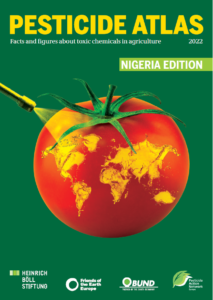
Pesticide Atlas was launched by the Alliance for Action on Pesticide In Nigeria (AANP) on the 3rd of April 2023. ANNP is a coalition of NGOs, academia, and experts who seek to increase awareness and demand improved regulation of the pesticides market in Nigeria. ERA/ FoEN is one of the founding members of ANNP.
This Atlas was launched considering the increasing global consumption of pesticides and how they cause harm to insects and plants while contaminating water bodies in Nigeria. Nigeria is one of Africa’s largest importers of pesticides and the highest in West Africa, with about 147,477 tons brought in 2020. Nigeria currently has no pesticide reduction strategy or plan, but Pesticide Atlas seeks to provide information on how pesticides are used and their impacts on human health and the environment in Nigeria.
Pesticide Atlas includes facts and figures about toxic chemicals in agriculture, pesticide use in Africa, and how pesticides contaminate rivers, lakes, coastal water, and groundwater. It also features the impact of pesticides on soil and invisible ecosystems, health consequences of pesticides as well as imported and exported pesticides banned in the European Union.
Mariann Bassey – Orovwuje, Deputy Executive Director of ERA and Coordinator of the Food Sovereignty Program of Friends of the Earth Nigeria and Africa noted that ‘it appears Nigerians are served poison on their platter. The reports show that “More than half of all the pesticide products registered in Nigeria have been withdrawn from the European market or are heavily restricted due to, among other issues, their high toxicity.” According to Mariann, ‘It is really concerning and disheartening that our government will continue to allow these toxic and dangerous substances that have been banned or heavily restricted in European markets to be used in Nigeria. How did we get here? Why should we be the dumping ground for these risky products’ She asked albeit rhetorically.
The report further revealed that “The high use of these toxic pesticides in Nigeria has negatively impacted export opportunities.
“In June 2015, the European Union banned the import of dried beans and other Nigerian agricultural products due to high pesticide residues considered dangerous to human health.
“Despite being banned in their home jurisdictions, European companies continue to export these hazardous pesticide products to Nigeria and other African countries, creating a double standard in pesticide trade.
However, the report presented an alternative to pesticide use by Nigerian farmers, “Alternatives to the high use of toxic pesticides exist, for example, agroecological cultivation practices, including more crop rotations and combinations, enable farmers to use less or no pesticides.”
 Mariann reiterated ‘the need for strict regulations and the banning of these toxic and poisonous chemicals to protect Nigerians, our food and environment. It should be People over Profits!’
Present during this session were representatives from the National Agency for Food and Drug Administration and Control (NAFDAC), the Federal Ministry of Agriculture and Rural Development (FMARD), the Federal Competition and Consumer Protection Council (FCCPC), the Small Holder Women Farmers Organization of Nigeria (SWOFON), where at the Launch. Heinrich-Böll-Stiftung Foundation Nigeria hosted the event whilst the Health of Mother Earth Foundation – one of the members of the AAPN, facilitated the event.
Download a free copy of the REPORT.